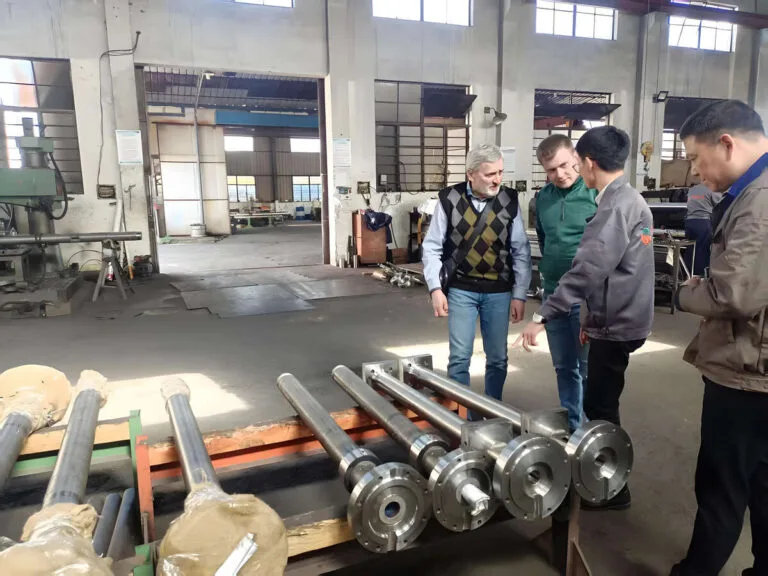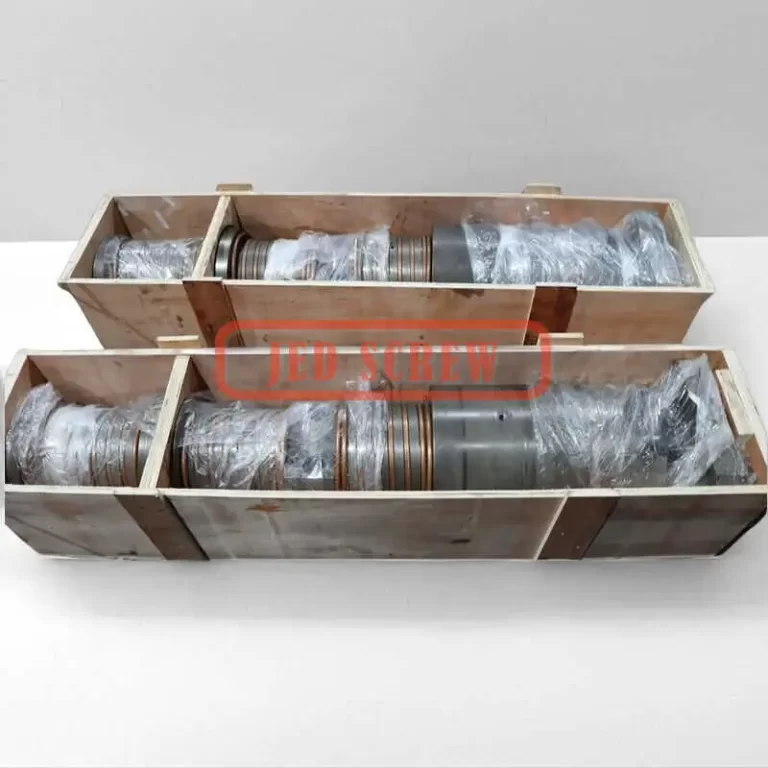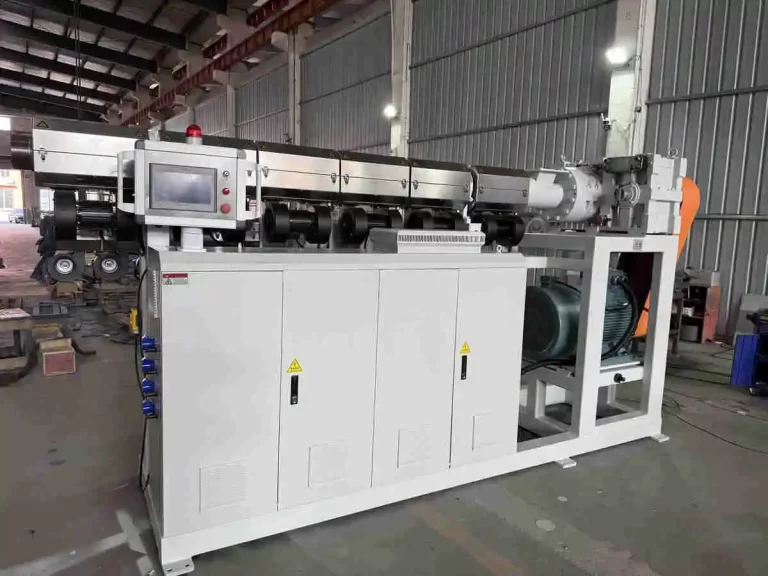


The screw of a blown film extruder is the core component of the extrusion system, and its structure directly affects plasticizing quality, extrusion stability, and film uniformity. A typical blown film extruder screw uses a single-screw design, divided into three functional zones: the feeding zone, the compression zone, and the homogenizing zone. These three zones work together to achieve solid conveying, melt plasticizing, and pressure equalization output.
Feeding Zone: Located at the front of the screw, this zone has a relatively deep screw channel. Its main function is to stably convey plastic granules. The screw pitch in this zone is relatively large to ensure smooth material entry and prevent bridging or blockage.
Compression Zone: The screw channel depth gradually decreases, and the plastic granules gradually melt through mechanical compression and external heating. This zone is crucial for the solid-liquid phase transition; the compression ratio must be designed to match the material properties (e.g., LDPE, HDPE, PP), typically between 2.5:1 and 3.5:1.
Homogenizing Zone: This section has the shallowest and most constant screw channel depth, responsible for homogenizing the melt temperature and pressure to ensure stable extrusion. This section exhibits low shear force, preventing overheating and degradation, which is crucial for film thickness uniformity.
Modern high-performance blown film extruders typically employ a split screw design (e.g., BM or Barr type), adding screw ribs in the compression section to physically isolate the solid bed from the melt bed, thereby improving plasticizing efficiency and reducing melt temperature fluctuations. Some machines are also equipped with mixing elements (e.g., pins or barrier blocks) to enhance melt mixing uniformity, particularly suitable for multilayer co-extrusion or the addition of masterbatches. Furthermore, to accommodate biodegradable materials (e.g., PBAT and PLA), some screws utilize high-speed alloy spraying technology and water-cooled ring designs, improving wear resistance and temperature control accuracy.
The screw’s length-to-diameter ratio (L/D) is typically between 20:1 and 30:1. A higher L/D ratio allows for more complete plasticizing and results in a smoother film surface. The material is usually made of corrosion-resistant, high-hardness alloy steel, precision-machined and surface-treated, offering a service life 2-3 times longer than conventional nitrided screws.
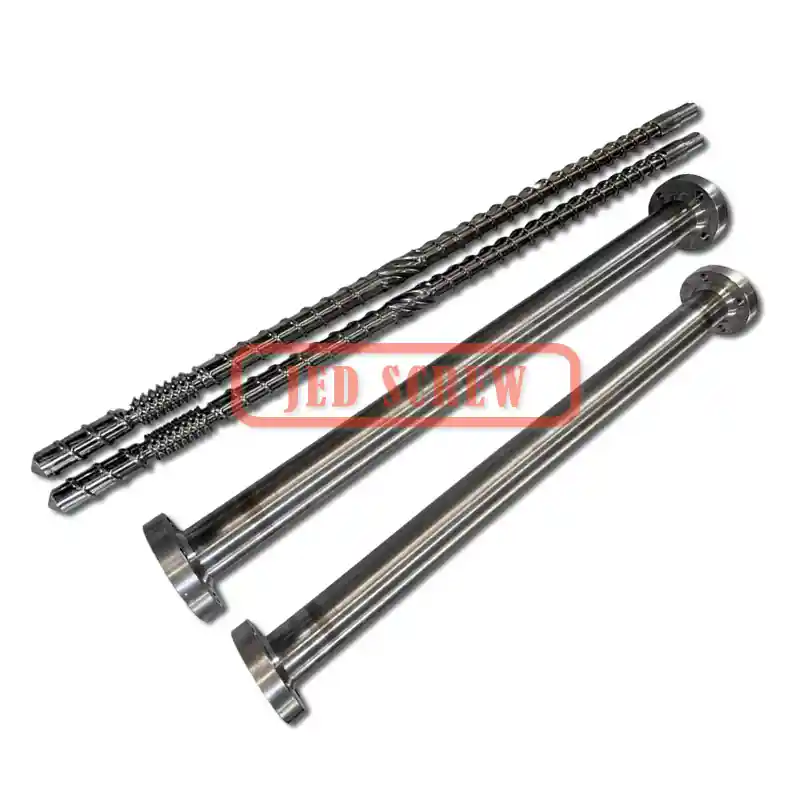
The materials used for the screw and barrel of a blown film machine are primarily selected based on the raw materials being processed, the operating environment, and lifespan requirements. Common materials can be categorized into three types: high-quality alloy steel, bimetallic composite materials, and special engineering alloys. Among these, 38CrMoAlA alloy steel is currently the most mainstream choice in the market.
This is the most widely used material for blown film machine screws and barrels, especially suitable for processing conventional plastics such as PE, PP, LDPE, HDPE, and LLDPE. After nitriding treatment, the surface hardness of this material can reach HV950–1050, with a nitrided layer depth of 0.5–0.8 mm. It combines high wear resistance, corrosion resistance, and good toughness, resulting in a long service life and low maintenance costs.
Advantages: High cost-effectiveness, stable processing, suitable for general film production.
Typical Applications: Bulk bag blown film machines, food packaging film production lines.
Common Alloy Layers: Nickel-based alloys, tungsten carbide, 9Cr18Mov stainless steel
Base Materials: SACM645, SKD61, German 8407-XW1, and other fully hardened tempered steels
Advantages: Strong abrasion resistance, suitable for fillers, recycled materials, fluoroplastics, and other difficult-to-process materials
Cost: Initial price is about 40% higher, but more economical in the long run
When processing high-performance engineering plastics such as PEEK (polyether ether ketone), materials with extremely high heat resistance, strength, and creep resistance are required. Companies such as Zhejiang Huaye have developed HPT series screws and HK bimetallic barrels specifically for PEEK, employing special heat treatment processes to meet the requirements for long-term stable operation at high temperatures of 160–230℃.
Applicable Scenarios: Medical, aerospace, high-end electronic packaging, and other fields with extremely stringent requirements for film performance.